
6 mins to read
CESAR .
Publicado em: 01 de abril de 2026
Atualizado em: 06 de abril de 2026
Mobility 4.0: How R&D Connects People, Data, and Cities
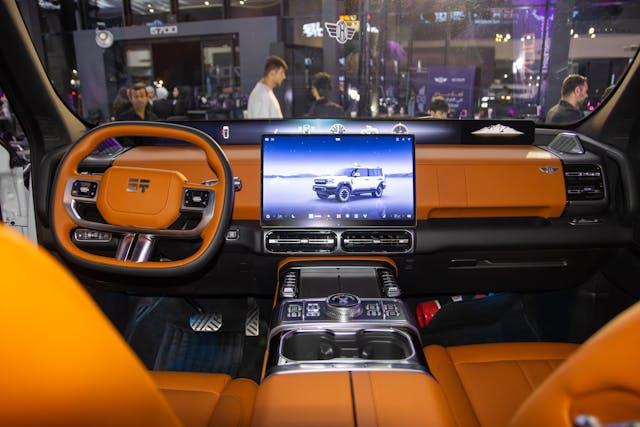
Research and development partnerships are accelerating the shift to smarter, safer, and more sustainable urban transportation—here’s how innovation ecosystems make it happen.
Urban mobility stands at a crossroads. Cities worldwide face mounting pressure to move more people with fewer emissions, less congestion, and greater safety. The solutions exist—connected vehicles, smart infrastructure, fleet electrification—but turning promising technologies into real-world impact demands more than engineering.
It requires structured research, cross-sector collaboration, and rigorous validation. That’s where Research, Development, and Innovation (R&D&I) enters the picture. By connecting applied research to industry needs and citizen expectations, R&D environments accelerate the journey from prototype to pavement.
The result: mobility solutions that are not only technically sound but also commercially viable and socially accepted.
MARKET MOMENTUM: The Global Mobility Transformation
|
The Innovation Challenge: From Lab to Street
Good ideas often stall before reaching the road. Mobility innovators face a predictable gauntlet: fragmented infrastructure, cautious regulators, capital constraints, and the ever-present question of consumer acceptance. A connected-vehicle prototype that performs flawlessly in simulation may stumble when confronted with legacy traffic systems, inconsistent 5G coverage, or drivers skeptical of unfamiliar technology.
R&D bridges this gap. Through pilot programs, controlled testbeds, and iterative refinement, innovation centers validate solutions before large-scale deployment—reducing risk for automakers, municipalities, and investors alike. The goal is not just invention, but applicability: solutions that work safely, efficiently, and at scale.
What Is R&D&I—And Why Does It Matter for Mobility?
R&D&I—Research, Development, and Innovation—is the engine that transforms concepts into commercial reality. The process unfolds in three stages: research identifies challenges and opportunities; development builds and tests prototypes; innovation brings validated solutions to market, creating value for companies and communities.
In mobility, this translates to connected vehicles that communicate with traffic signals, real-time fleet management platforms, shared-mobility apps that integrate multiple modes, and charging networks optimized by AI. Each advancement passes through the R&D funnel: researched, prototyped, tested, refined, and deployed.
How Innovation Ecosystems Connect Research, Industry, and Citizens
Science and Technology Institutions (STIs)—known in Brazil as ICTs—serve as neutral ground where academic researchers, private companies, and public agencies collaborate. These hubs create a continuous innovation cycle: solutions are developed, tested in controlled environments, and improved based on real-world feedback before reaching consumers.
CESAR exemplifies this model. Working alongside automotive OEMs, technology startups, and government partners, CESAR contributes to the development of smart infrastructure systems, electrification solutions, and connected-vehicle platforms. By testing prototypes in collaboration with stakeholders—and integrating end-user feedback throughout—innovative concepts move from lab to street, adapted to the specific needs of cities and their inhabitants.
Three Technologies Reshaping Urban Mobility
1. Connected Vehicles and V2X Communication
Vehicle-to-Everything (V2X) connectivity enables cars, trucks, and buses to communicate with each other (V2V), with infrastructure (V2I), and with the cloud (V2N). Real-time data exchange optimizes traffic flow, reduces congestion, and increases road safety—particularly as autonomous driving features advance.
A concrete example: VAI, the personal fleet assistant developed by CESAR in partnership with Wings, uses AI to monitor fleet health, generating precise alerts about maintenance needs and vehicle performance. Equipped with GPS, IoT sensors, and cellular connectivity, VAI already serves thousands of vehicles—enabling efficient fleet management and reducing operational costs.
2. Smart Infrastructure and IoT Integration
Smart infrastructure modernizes urban systems with sensors, adaptive traffic signals, and real-time monitoring that adjusts to current conditions. The Internet of Things (IoT) plays a central role: embedded sensors collect data from streets, buildings, and vehicles, helping cities manage traffic, locate parking, and optimize public transit.
This technology also supports the expansion of sustainable mobility—including the integration of EV charging points into the urban fabric. As charging networks grow (the U.S. added a record 766 high-speed charging stations in Q4 2024 alone), smart infrastructure ensures that supply meets demand.
3. Transport Electrification
Electrification is fundamental to urban sustainability. The transition to electric vehicles—coupled with expanded charging infrastructure—reduces tailpipe emissions and improves air quality. R&D accelerates this shift by improving battery technology (lithium-ion pack prices fell to $108/kWh in 2024, down 40% over five years), fast-charging systems, and vehicle-to-grid integration.
MARKET MOMENTUM: Fleet Electrification Accelerates
|
CESAR participates in initiatives that test and implement electrification solutions, helping accelerate the transition to greener, more economical transportation. Additional technologies—real-time fleet management, shared mobility platforms, autonomous last-mile delivery—complement electrification, expanding options for smarter and more accessible urban transit.
Strategic Partnerships in Action: CESAR, EyeFlow, and Volkswagen
The collaboration between CESAR, EyeFlow, and Volkswagen Truck & Bus demonstrates how R&D partnerships drive mobility innovation.
The initiative began with deep research: benchmarking, user interviews, scenario mapping, and conceptual prototyping—all focused on understanding how commercial trucks can better communicate with their surrounding environment in dense urban traffic. Now advancing into development, the project is refining solutions born from this user-centric, technology-forward approach.
This collaboration illustrates how well-founded innovation brings greater safety, efficiency, and intelligence to freight transportation—making cities smarter and more inclusive.
The Role of Government Incentives: MOVER, FINEP, and Beyond
Public incentives play a critical role in accelerating mobility innovation. In Brazil, programs such as MOVER (Mobilidade Verde e Inovação) and FINEP (Financiadora de Estudos e Projetos) provide financial resources and technical support for companies and startups developing new urban mobility technologies.
Similar frameworks exist worldwide—from the U.S. Bipartisan Infrastructure Law’s $90.5 billion allocation for public transit modernization to the EU’s Horizon Europe funding for sustainable mobility research.
These programs recognize that mobility transformation is not a one-time project but a continuous process of research and development. Just like society itself, urban transportation is always evolving—and sustained investment in R&D ensures that innovation keeps pace with changing needs.