
7 mins to read
CESAR .
Publicado em: 13 de maio de 2026
Atualizado em: 15 de maio de 2026
EV Charging Infrastructure: The Technology Trends Powering Electric Mobility
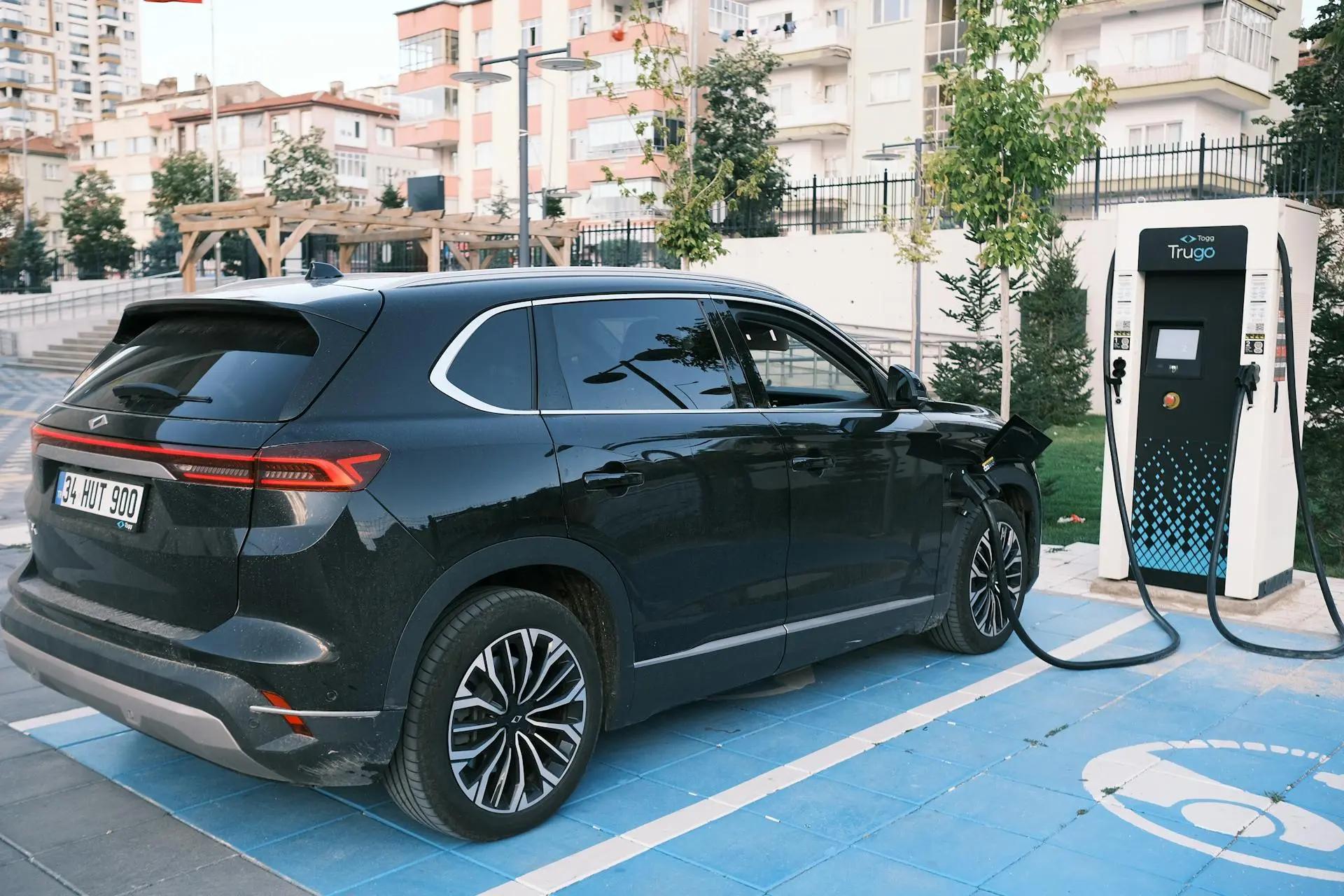
Electric vehicle adoption depends on charging infrastructure that is fast, reliable, and accessible. Here is where the technology stands-and where it is headed.
Electric vehicles have crossed the threshold from niche to mainstream.
Global EV sales reached 17.8 million units in 2024, capturing nearly 20% of the new car market. Battery costs have fallen 40% over five years to roughly $108 per kilowatt-hour. And the average EV range has doubled in a decade, with many models now exceeding 300 miles on a single charge.
But the vehicles are only half the equation. Mass EV adoption depends on charging infrastructure that matches the convenience of gasoline – fast enough to fit into daily life, reliable enough to trust, and accessible enough to reach underserved communities.
Building that infrastructure is one of the defining challenges of the mobility transition.
MARKET MOMENTUM: Charging Infrastructure Scales Up
- The U.S. added 766 new high-speed charging stations in Q4 2024 alone; a record quarter (DOE)
- Public EV charging revenue is projected to grow from ~$10 billion (2025) to $220 billion (2040) in Europe and North America (BloombergNEF)
- The U.S. Bipartisan Infrastructure Law allocates $7.5 billion specifically for EV charging through the NEVI program
- The EU Alternative Fuels Infrastructure Regulation (AFIR) mandates charging stations every 60 km on major highways by 2025
- Tesla opened its Supercharger network to other automakers, accelerating cross-brand charging access
The Current State of EV Charging
EV charging infrastructure has expanded rapidly, but gaps remain. Understanding the current landscape-what works, what does not, and where investment is flowing-is essential for companies building the future of electric mobility.
Consumer Confidence: The Reliability Challenge
Infrastructure anxiety remains a barrier to EV adoption.
A ChargerHelp study found that more than 50% of Americans in the U.S. hesitate to buy electric vehicles due to concerns about insufficient charging stations. More troubling: approximately one in five charging attempts at public stations fails due to broken equipment, software glitches, or payment processing issues.
Reliability is as important as availability. A charging network that drivers cannot trust undermines the entire value proposition of electric mobility. This is why major investments are flowing not just into new stations, but into maintenance, uptime monitoring, and user experience improvements.
Major Charging Networks
In North America, Tesla’s Supercharger network remains the gold standard as the largest, most reliable, and best-integrated charging experience. Tesla’s decision to open Superchargers to other automakers (and license its NACS connector standard) is reshaping the competitive landscape.
Electrify America (funded by VW’s diesel settlement) and ChargePoint operate the largest non-Tesla networks in the U.S., with thousands of stations along highways and in urban centers. In Europe, Ionity (backed by BMW, Ford, Hyundai, Mercedes, and VW) is building a high-power charging network across major corridors.
Infrastructure Challenges: What Stands in the Way
Scaling EV charging infrastructure to meet projected demand requires solving interconnected technical, economic, and logistical challenges.
Charging Speed: Closing the Gap with Gasoline
Consumers expect charging to approach the convenience of a gas station fill-up.
Level 2 chargers (typical for home and workplace) take 4-10 hours for a full charge-fine for overnight use, but impractical for road trips. DC fast chargers can deliver 80% charge in 20-45 minutes, but ultra-fast stations (350 kW and above) remain expensive to deploy and require vehicles capable of accepting high power levels.
The charging experience is improving rapidly. Some newer EVs can add 200+ miles of range in under 20 minutes at compatible stations; approaching the convenience threshold that enables mass adoption.
Geographic Distribution: Urban vs. Rural
Charging infrastructure clusters in urban areas and along major highway corridors, leaving rural communities underserved. This creates a chicken-and-egg problem: rural residents hesitate to buy EVs without nearby charging; operators hesitate to build stations without sufficient EV traffic to justify investment.
Government programs aim to address this gap. The U.S. National Electric Vehicle Infrastructure (NEVI) program prioritizes charging corridors that connect rural and underserved communities. The EU’s AFIR regulation mandates minimum coverage across all member states, including less-trafficked routes.
Grid Integration: Managing Energy Demand
Widespread EV adoption will significantly increase electricity demand. Grids must be upgraded to handle this load-particularly the localized spikes that occur when multiple vehicles charge simultaneously at a single location or when drivers return home from work and plug in during peak evening hours.
Smart charging solutions help manage this challenge: time-shifting charging to off-peak hours, integrating vehicle-to-grid (V2G) technology that allows EVs to feed power back during high-demand periods, and coordinating with renewable energy generation to charge when solar or wind production peaks.
INDUSTRY CONTEXT: The Standards Question
- NACS (Tesla’s connector) is becoming the North American standard-Ford, GM, Rivian, and others have adopted it
- CCS (Combined Charging System) remains dominant in Europe and is still used by many U.S. networks
- Standardization simplifies the user experience and reduces infrastructure costs
- Bidirectional charging (V2G) standards are still evolving, with pilots underway in multiple markets
Technology Innovations Reshaping EV Charging
Innovation in charging technology is accelerating, with solutions emerging that could fundamentally change how and where EVs charge.
Ultra-Fast Charging
Next-generation chargers operating at 350 kW and above can deliver substantial range in minutes rather than hours. Tesla’s V4 Superchargers, Electrify America’s Hyper-Fast stations, and similar deployments are making sub-20-minute charging sessions increasingly common for compatible vehicles.
Wireless (Inductive) Charging
Wireless charging eliminates cables entirely-drivers simply park over a charging pad embedded in the ground. While efficiency losses and installation costs have limited adoption, the technology is advancing. Wireless charging could be particularly valuable for autonomous vehicles that need to charge without human intervention, and for high-turnover applications like taxi stands.
Solar Integration and Battery Storage
Charging stations increasingly integrate solar canopies and on-site battery storage. Solar generation offsets grid demand; batteries buffer peak loads and provide backup during outages. This combination reduces operating costs, improves reliability, and advances the sustainability goals that drive EV adoption in the first place.
Vehicle-to-Grid (V2G) and Bidirectional Charging
EVs are not just consumers of electricity-they are mobile batteries that can feed power back to homes, buildings, or the grid. V2G technology transforms parked EVs into distributed energy storage, providing grid stability services and creating potential revenue streams for vehicle owners. Pilots are underway with utilities across Europe and North America.
Policy and Incentives Driving Infrastructure Investment
Government policy is accelerating charging infrastructure deployment through direct investment, regulatory mandates, and incentive programs.
In the United States, the Bipartisan Infrastructure Law allocates $7.5 billion specifically for EV charging, with the NEVI program funding stations along designated Alternative Fuel Corridors. Additional tax credits support private charging infrastructure investment.
The European Union’s Alternative Fuels Infrastructure Regulation (AFIR) mandates minimum charging coverage: stations every 60 kilometers on major highways, with specific power capacity requirements. Member states must submit national deployment plans and report progress.
In Brazil, the MOVER Program (Green Mobility and Innovation) supports companies developing sustainable mobility solutions-including charging infrastructure-through tax incentives, R&D funding, and collaborative partnerships with innovation institutes.
CESAR: Supporting the Charging Infrastructure Ecosystem
CESAR partners with companies across the mobility ecosystem to develop technologies that enable efficient, reliable, and sustainable EV charging-from smart grid integration to user experience optimization.
With expertise in IoT, embedded systems, and software development, CESAR helps organizations build charging solutions that integrate seamlessly with vehicles, grids, and user applications. Our work spans hardware interfaces, cloud platforms, mobile apps, and the data analytics that optimize charging operations.
The MOVER Program provides resources and incentives for companies developing sustainable mobility technologies-including EV charging infrastructure, smart grid integration, and renewable energy solutions.
Ready to build the charging infrastructure that powers electric mobility? CESAR partners with automakers, energy companies, and infrastructure providers to develop smart, scalable charging solutions. Explore CESAR’s Mobility Solutions ->