
7 mins to read
CESAR .
Publicado em: 20 de maio de 2026
Connectivity and Smart Mobility: The Technologies Reshaping How We Move
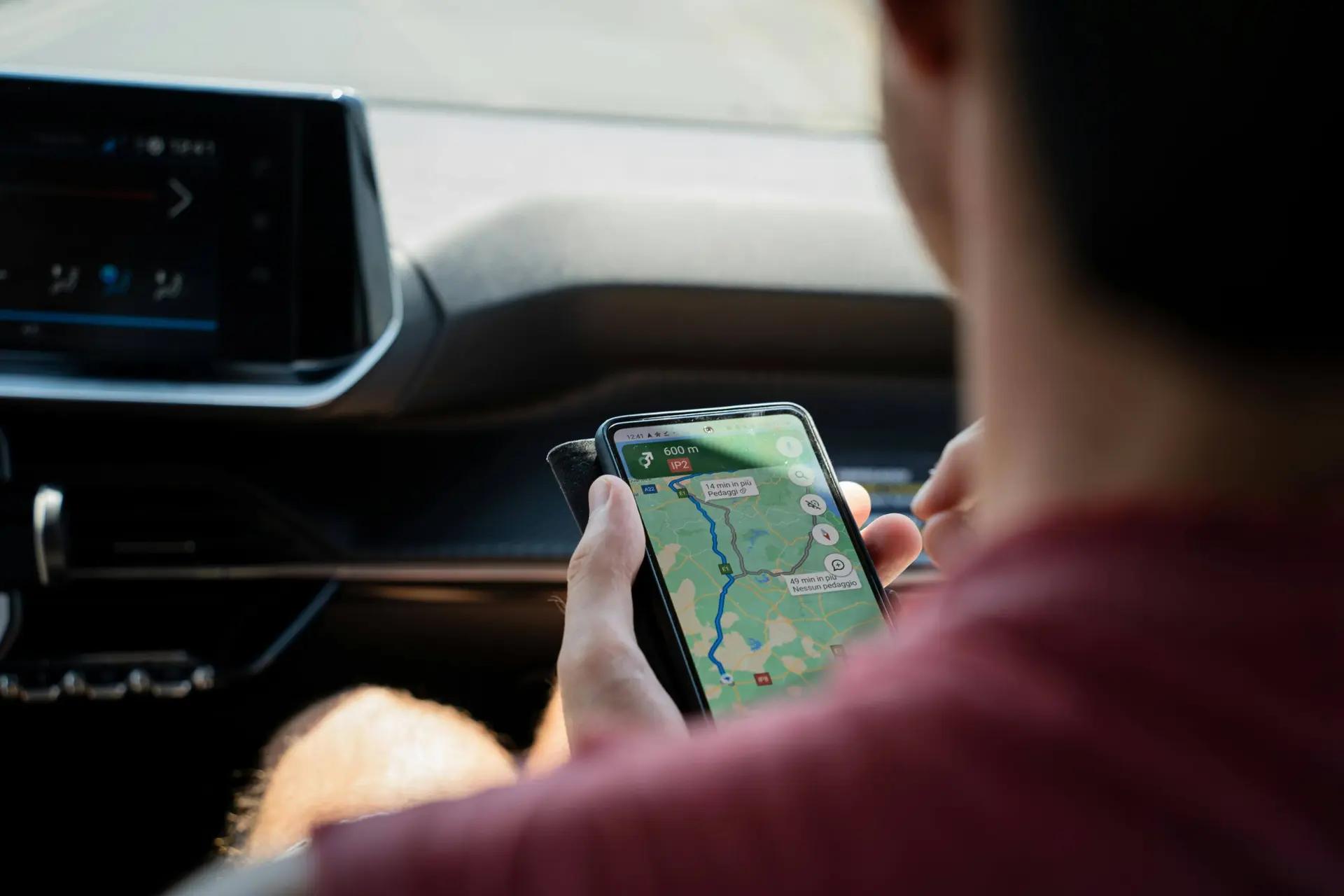
From connected vehicles to intelligent infrastructure, the convergence of IoT, AI, and 5G is creating transportation systems that are safer, more efficient, and increasingly autonomous.
Urban mobility is undergoing a fundamental transformation. The vehicles we drive, the infrastructure they navigate, and the systems that manage traffic flow are becoming deeply interconnected-sharing data in real time to optimize routes, reduce congestion, prevent accidents, and minimize environmental impact.
This shift toward connected, intelligent mobility is not a distant vision. It is happening now, driven by converging technologies: the Internet of Things (IoT) embedding sensors throughout transportation networks, AI making sense of massive data streams, and 5G networks enabling real-time vehicle communication, and electric powertrains to create cleaner, software-defined vehicles.
MARKET MOMENTUM: Connected Mobility Accelerates
- Connected car services are projected to generate $310 in revenue and $180 in cost savings per vehicle annually by 2030 (McKinsey)
- Global EV sales reached 17.8 million units in 2024-up 25% year-over-year, capturing nearly 20% market share
- The autonomous vehicle market is growing from $176.5 billion (2025) to $553.4 billion by 2030 (Mordor Intelligence)
- The Mobility as a Service (MaaS) market is expected to reach $500-634 billion by 2030 (Deloitte/Mordor Intelligence)
- 87% of commercial fleets plan to integrate electric vehicles within five years (Geotab)
Key Technology Trends Driving Smart Mobility
Several interconnected technologies are converging to create transportation systems that are more intelligent, efficient, and responsive than anything previously possible.
Internet of Things (IoT): The Nervous System of Smart Mobility
IoT sensors are embedding intelligence throughout transportation networks-in vehicles, traffic signals, parking structures, transit stations, and road surfaces. These sensors collect real-time data on traffic flow, vehicle positions, air quality, road conditions, and infrastructure status.
This data enables responsive systems: traffic signals that adapt to actual conditions rather than fixed timers, parking apps that show available spaces in real time, transit systems that adjust schedules based on demand. The result is infrastructure that actively manages itself rather than passively waiting for human intervention.
AI and Machine Learning: Intelligence at Scale
AI transforms raw IoT data into actionable intelligence. Machine learning models analyze traffic patterns to predict congestion before it occurs, optimize routing across entire networks, and personalize mobility services to individual preferences.
In vehicles, AI powers everything from advanced driver assistance systems (ADAS) to fully autonomous operation. AI-based predictive maintenance identifies potential failures before they strand drivers. Natural language processing enables voice-controlled infotainment and navigation. Computer vision systems read traffic signs, detect pedestrians, and interpret complex driving scenarios.
V2X Communication: Vehicles That Talk to Everything
Vehicle-to-Everything (V2X) communication enables cars, trucks, and buses to exchange data with each other (V2V), with infrastructure (V2I), with pedestrians’ devices (V2P), and with the broader network (V2N). This connectivity unlocks safety and efficiency benefits impossible with isolated vehicles.
A connected vehicle can receive warnings about hazards beyond the driver’s line of sight, such as a car braking suddenly around a curve, an emergency vehicle approaching from blocks away, or a traffic signal about to change. V2X-equipped intersections can coordinate approaching vehicles to minimize stops and maximize throughput.
Two competing V2X standards have emerged:
DSRC (Dedicated Short-Range Communications), a WiFi-based technology, and C-V2X (Cellular Vehicle-to-Everything), which leverages cellular networks and is increasingly favored by automakers for its evolution path to 5G.
5G Networks: The Bandwidth for Real-Time Mobility
5G cellular networks provide the bandwidth, low latency, and device density that connected mobility demands. Where 4G might support hundreds of devices per cell tower, 5G can handle millions-essential for dense urban environments where thousands of vehicles, sensors, and infrastructure elements must communicate simultaneously.
Ultra-low latency (under 10 milliseconds) enables safety-critical applications where split-second communication can prevent accidents. High bandwidth supports over-the-air software updates, real-time HD mapping, and rich infotainment services that enhance the connected vehicle experience.
Electric Vehicles: The Foundation of Connected Mobility
Electric vehicles are inherently more connected than their internal combustion predecessors. EVs are software-defined platforms with sophisticated battery management systems, regenerative braking controls, and power electronics-all generating data and accepting over-the-air updates.
This connectivity enables features impossible in traditional vehicles: remote preconditioning (heating or cooling the cabin before you arrive), real-time range optimization based on traffic and terrain, smart charging that responds to grid conditions and electricity prices, and continuous performance improvements delivered via software updates.
The global EV market continues rapid expansion:
Sales reached 17.8 million units in 2024, representing 25% year-over-year growth and nearly 20% of all new vehicle sales. In leading markets like China, EV penetration has already exceeded 50%. This growth creates an expanding base of connected vehicles feeding data into smart mobility ecosystems.
INDUSTRY CONTEXT: Smart City Initiatives
- Columbus, Ohio won the U.S. DOT Smart City Challenge, deploying connected vehicle corridors and integrated mobility platforms
- The EU Horizon Europe program funds smart mobility research across member states, including urban air mobility and MaaS integration
- Singapore’s Virtual Singapore project has created a digital twin of the entire city for traffic simulation and planning
- China has designated 16 pilot zones for intelligent connected vehicle testing and deployment
The Smart Mobility Startup Ecosystem
Innovation in connected mobility extends far beyond established automakers. A vibrant startup ecosystem is developing specialized solutions across the mobility value chain.
Research by Sem Parar and Liga Ventures identified 157 active mobility startups in Brazil alone, spanning electric mobility (25% of startups), data intelligence (13%), support services (11%), shared mobility (9%), and corporate fleet solutions (8%). Similar ecosystems are flourishing in the U.S., Europe, and Asia.
These startups are tackling specific problems within the broader mobility transformation: optimizing last-mile delivery, enabling micro-mobility sharing, providing fleet telematics, developing charging infrastructure software, and creating MaaS platforms that integrate multiple transportation modes.
Challenges in Connected Mobility Deployment
Despite the promise, companies pursuing smart mobility solutions face significant obstacles.
Technical Complexity and Integration
Connected mobility requires integrating multiple complex systems: vehicle platforms, communication networks, cloud infrastructure, edge computing, cybersecurity, and user applications. Each part requires expert design, and integrating them smoothly takes advanced systems engineering.
Evolving Standards and Interoperability
The smart mobility ecosystem involves multiple competing standards-for V2X communication, charging connectors, data formats, and security protocols. Companies must make technology bets while standards continue to evolve to ensure their solutions can interoperate with diverse systems from multiple vendors.
R&D Investment and Talent
Developing connected mobility solutions requires substantial R&D investment and specialized talent in areas like embedded systems, AI/ML, cybersecurity, and automotive engineering. Competition for this talent is intense, and the rapid pace of technological change demands continuous learning and adaptation.
Programs like EMBRAPII (in Brazil) and similar initiatives in the U.S. and EU help bridge this gap-providing funding, connecting companies with research institutions, and reducing the risk of innovation investment. These collaborative models accelerate development while sharing costs and expertise.
CESAR: Your Partner in Connected Mobility Innovation
CESAR brings deep expertise in the technologies driving smart mobility-IoT, artificial intelligence, embedded systems, cybersecurity, and product design. Our multidisciplinary teams help companies navigate technical complexity, accelerate development cycles, and bring connected mobility solutions to market.
Case Study: CESAR + Wings – VAI Fleet Intelligence
A prime example of CESAR‘s connected mobility work: partnering with Wings (with EMBRAPII support) to develop VAI-an AI-powered vehicle assistant that monitors fleet health in real time.
VAI uses machine learning to detect faults, analyze performance patterns, and generate predictive alerts before problems occur. Equipped with GPS, motion sensors, and cellular connectivity, VAI provides real-time tracking, speed monitoring, vehicle status updates, and mechanical failure warnings. Currently serving 12,000+ vehicles, VAI demonstrates how connected intelligence transforms fleet operations-improving safety, reducing downtime, and enabling increasingly autonomous management.
The MOVER Program (Green Mobility and Innovation) provides reso
urces and incentives for companies developing connected, sustainable mobility solutions-from IoT platforms to AI-powered fleet management to V2X communication systems.
Ready to build connected mobility solutions?
CESAR partners with companies across the mobility ecosystem-from automakers to fleet operators to smart city developers-to turn connectivity into competitive advantage. Explore CESAR’s Mobility Solutions ->