8 mins to read
CESAR .
Publicado em: 22 de setembro de 2026
CNOOC Brasil: Digital Twins and AI for well construction in Brazil’s pre-salt
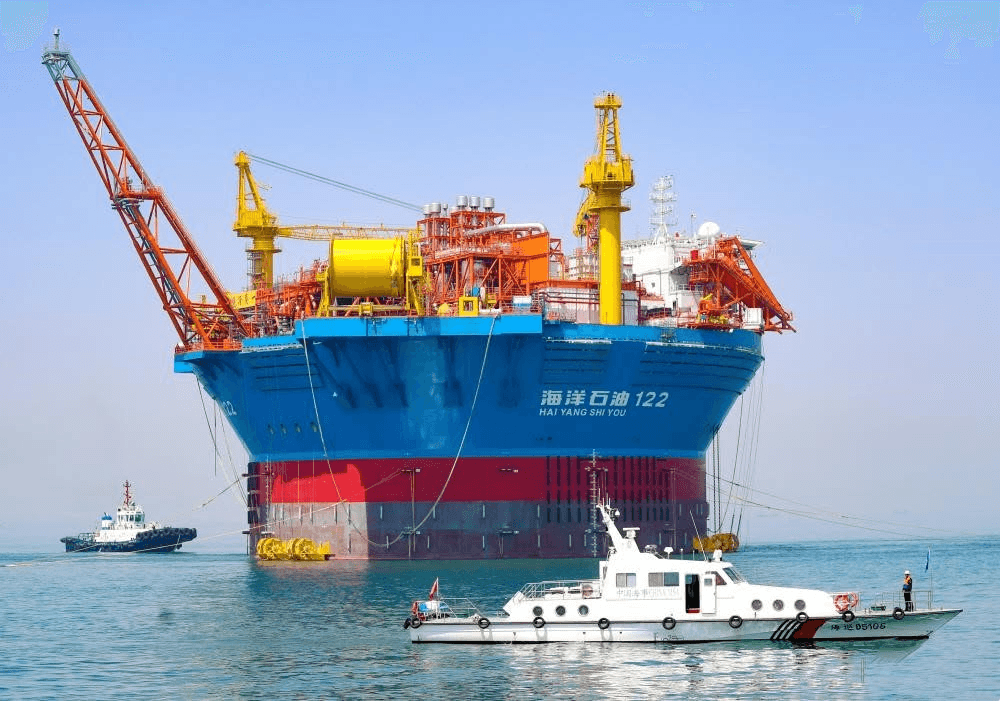
Building an oil well in complex environments such as Brazil’s pre-salt fields involves a series of highly demanding stages. The process begins with drilling and continues through completion, when the well is prepared and the equipment required to start production is installed.
Throughout this process, large volumes of data need to be monitored and analyzed to identify deviations, understand operational events and support decisions that can directly affect performance.
To help address these challenges, CNOOC Brasil, CESAR and the Federal University of Alagoas (UFAL) are developing a solution based on Digital Twins and Artificial Intelligence, combining technology, applied research and specialized petroleum engineering expertise.
The solution is designed to bring together information currently spread across multiple sources and integrate it with physics-based, mathematical and AI models capable of comparing expected operational behavior with actual field performance. This gives engineers a broader set of insights to identify risks, investigate deviations and assess opportunities for improvement. From CNOOC Brasil’s perspective, understanding the operational history is essential to making better-informed decisions for future operations.
In well engineering, CNOOC Brasil identified a key priority: systematically capturing, organizing and analyzing the information generated throughout operations. The goal is to turn accumulated experience, including performance data, innovations and lessons learned, into actionable knowledge that can support increasingly safe, efficient and optimized operations in the future. To address this challenge, CNOOC Brasil partnered with CESAR and UFAL, allocating R&D&I resources to the development of the solution.
Turning well construction data into better-informed decisions
Throughout the drilling and completion stages, large volumes of information are continuously generated. Some of this data comes in unstructured formats, such as technical documents and daily operational reports, requiring engineers to review and interpret multiple sources to reconstruct the operational history, identify events and investigate potential causes of underperformance.
One of the project’s key challenges is to turn the information contained in well planning and execution documents into a structured, traceable knowledge base. This foundation is designed to make it easier to identify, correlate and interpret relevant information from offset wells, leveraging experience from previous operations to support the planning and execution of new wells.
These operations take place in challenging offshore environments, with water depths approaching 2 kilometers and wells reaching depths of 6 to 7 kilometers. Even when the sequence of operations has been carefully planned in advance, differences can emerge between expected performance and what actually occurs in the field during well construction.
Among the events that require particular attention is non-productive time (NPT), periods when operations are interrupted due to equipment failures or other operational issues. Identifying the root causes of these interruptions can turn operational history into valuable knowledge for future decisions. In an environment where a single failure can result in days of downtime and require significant resources, anticipating risks can help reduce corrective interventions and their operational impact.
“One of the areas we want to understand better is non-productive time, or NPT. It is not enough to know that an interruption occurred; we need to understand what caused it, identify the root cause and turn that learning into knowledge that can support future operations. This is where Digital Twins and Artificial Intelligence can make a difference, helping us anticipate risks and reduce the impact of downtime and corrective interventions,” explains Thaysa dos Anjos, Project Manager at CESAR.
Digital Twins, AI and petroleum engineering
The solution developed by CNOOC Brasil, CESAR and UFAL acts as an “advanced copilot” for engineers, organizing and interpreting data from multiple sources and connecting it to models that can represent how the operation is expected to behave.
The approach combines traditional physics-based models, Digital Twins, data-driven methods and AI, making it possible to compare expected behavior, as predicted by the models, with actual field performance. Drilling-related variables such as weight, pressure and rotation can be analyzed alongside the operational history to identify risk conditions, investigate underperformance and support adjustments before certain issues develop into failures.
In drilling performance, for example, models developed with UFAL’s participation take into account factors such as geological formations and equipment configurations to estimate expected behavior.
Comparing these predictions with actual field results can reveal opportunities to adjust equipment configurations or operating conditions. The project also includes the analysis of the BHA (Bottom Hole Assembly), the set of components located at the lower end of the drill string, as well as models focused on well completion, supporting the assessment of the configurations used to prepare the well for production.
“Applying AI and Digital Twins to Brazil’s pre-salt operations requires a high degree of technical precision and the ability to process large volumes of data. Our work with CNOOC and UFAL is focused on addressing complex engineering challenges through technology, demonstrating the Brazilian innovation ecosystem’s ability to deliver solutions that can be applied to highly complex operations,” says Beto Macedo, Executive Director at CESAR.

The initiative also explores open-source AI models, with the goal of reducing the infrastructure required for cloud processing while improving computational and energy efficiency. Bringing these capabilities together requires a multidisciplinary effort, combining CESAR’s expertise in software, data, AI, design and quality, UFAL’s specialized knowledge in petroleum engineering and modeling, and CNOOC Brasil’s firsthand understanding of real-world operational conditions and requirements.
A platform evolving through real-world operational needs
The project already has a first functional version of the platform, currently being validated by CNOOC Brasil in a non-production environment. Engineers can use it to access well information and key parameters, upload and analyze documents, export data, and further investigate events associated with non-productive time.
Based on its initial experience with the prototype, CNOOC Brasil believes the solution is already moving in the intended direction, incorporating relevant well performance information such as drilling parameters and the Time vs. Depth curve.
Feedback from this validation stage is already shaping the platform’s development. Features that allow users to access well-specific information and compare multiple parameters within the same view, for example, were added in response to needs identified during use. The platform is therefore being continuously developed and refined around the specific characteristics of the operation and the experience of the professionals who use it.
“Our collaboration with CESAR has been highly productive and valuable so far. Throughout the development process, we have also identified several opportunities for optimization together. We are now about to receive the second version of the prototype, which is expected to include new features and significantly expand our ability to assess the solution,” says Breno Tebaldi, D&C Lead at CNOOC Brasil.
As more data is incorporated, the platform’s ability to compare operations, investigate causes and identify patterns related to performance and NPT also increases. The goal is to gradually expand the database to include at least 100 wells, increasing both the volume and diversity of information available for analysis.
“The goal is to progressively expand this database and incorporate statistical, analytical and AI models to support the monitoring of drilling and completion operations. The next development cycles will include a deeper classification of non-productive time (NPT) events, identifying their root causes and correlating them with the operational schedule. This will make it possible to assess their impact on timelines, the S-curve and the costs forecast in Authorization for Expenditure (AFE) documents,” explains João Paulo Santos, professor at UFAL.
In parallel, performance optimization models are being developed to support the selection of equipment and operating parameters, with the aim of improving efficiency and reducing operation time. Upcoming development cycles also include preparing the architecture to receive real-time data, introducing new anomaly-detection modules, and integrating information from the drilling and production phases. As the solution evolves, Digital Twins and AI can strengthen the ability to anticipate failures and support more predictive operations, with the potential to reduce corrective interventions, costs and the resources required for offshore activities.
“There is significant potential for further development. By the end of the project, we expect the main stages of well construction to be integrated into the solution, enabling users to clearly and systematically understand what worked well, what can be improved and, most importantly, apply lessons learned from previous operations to the planning and execution of future wells,” adds Breno.
Applied innovation for oil and gas challenges
Highly complex challenges in the oil and gas industry require expertise across multiple disciplines, along with a deep understanding of the environment in which technology will be applied.
At CESAR, expertise in Artificial Intelligence, Data, Software engineering, Digital Twins and Applied Research is combined with business knowledge and the experience of specialists from different fields to develop solutions tailored to the specific needs of each operation.
In the project developed with CNOOC Brasil and UFAL, this multidisciplinary approach brings petroleum engineering and technology development together to turn large volumes of data into new opportunities for analysis and decision support. The solution continues to evolve as new data, models and operational learnings are incorporated.
Explore CESAR’s work in oil and gas and the technologies we apply to industry challenges: https://oeg.cesar.org.br/en