
7 mins to read
CESAR .
Publicado em: 12 de maio de 2026
Autonomous Vehicles: The Technology, the Challenges, and the Road Ahead
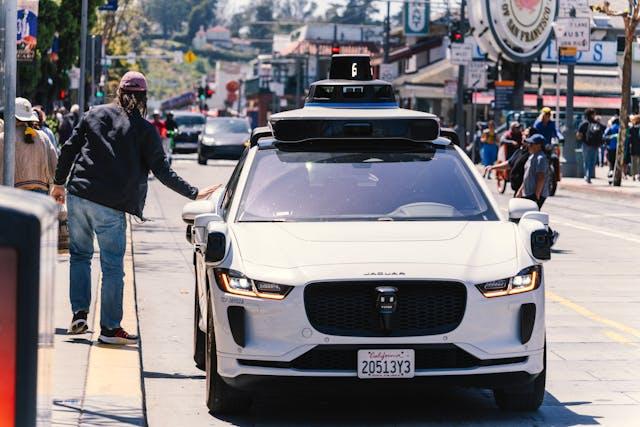
Autonomous vehicles represent one of the most ambitious technological undertakings of our era-machines capable of perceiving their environment, making real-time decisions, and navigating complex traffic scenarios without human intervention.
The promise is transformative: safer roads, reduced congestion, more efficient logistics, and mobility access for those who cannot drive. But moving from promise to reality requires solving problems that span artificial intelligence, sensor technology, regulatory frameworks, and public trust.
Understanding where autonomous vehicle technology stands today-and what obstacles remain-is essential for anyone building the future of mobility.
MARKET MOMENTUM: Autonomous Vehicles Accelerate
|
How Autonomous Vehicles Work
Autonomous vehicles combine multiple technologies into integrated systems capable of perceiving the environment, planning routes, and controlling the vehicle-all in real time.
The Sensor Stack: “Eyes on the Road”
AVs rely on complementary sensor technologies, each with distinct strengths.
Cameras provide rich visual information-reading traffic signs, identifying lane markings, recognizing pedestrians.
Radar detects objects and measures their speed regardless of lighting or weather conditions. LiDAR (Light Detection and Ranging) creates detailed 3D maps of the surrounding environment, measuring distances with centimeter-level precision.
Ultrasonic sensors handle close-range detection for parking and low-speed maneuvering. GPS and high-definition mapping provide localization-knowing exactly where the vehicle is within its environment. The combination of these sensors creates redundancy: if one system fails or encounters limitations, others compensate.
AI: The Brain Behind the Wheel
AI processes the massive data streams from sensors-interpreting what the vehicle ‘sees,’ predicting how other road users will behave, and deciding what actions to take.
Machine learning models trained on millions of miles of driving data enable AVs to recognize complex scenarios: a pedestrian stepping off a curb, a cyclist signaling a turn, a construction zone with unusual lane markings.
The economics of AV compute have improved dramatically:
NVIDIA and Qualcomm have driven the cost per TOPS (Tera Operations Per Second) below $0.50, making the processing power required for autonomous driving economically viable at scale. AV software is now the fastest-growing segment of the market, expanding at a 26.5% CAGR as vehicles become increasingly software-defined.
SAE Automation Levels: A Common Framework
The SAE J3016 standard defines six levels of driving automation (0-5), providing a common language for the industry:
- Level 0-1: No automation to basic driver assistance (adaptive cruise control, lane-keeping)
- Level 2: Partial automation-the vehicle can steer and accelerate/brake, but the driver must remain engaged (Tesla Autopilot, GM Super Cruise)
- Level 3: Conditional automation-the vehicle handles all driving in specific conditions, but the driver must be ready to take over (Mercedes-Benz DRIVE PILOT)
- Level 4-5: High to full automation-the vehicle operates without human intervention in defined areas (Level 4) or all conditions (Level 5). Waymo and Cruise robotaxis operate at Level 4.
Most vehicles on the road today with advanced driver assistance operate at Level 2. Level 2 and Level 3 systems are expected to account for nearly two-thirds of new vehicle sales in coming years, representing the industry’s near-term commercial focus.
Connected Vehicles: V2V and V2X Communication
Autonomous vehicles become even more capable when they can communicate with each other and with surrounding infrastructure. V2V (Vehicle-to-Vehicle) communication allows cars to share position, speed, and intent, enabling coordinated braking, platooning, and collision avoidance that would be impossible with sensors alone.
V2X (Vehicle-to-Everything) extends this connectivity to traffic signals, road signs, pedestrian crossings, and emergency vehicles.
A traffic light can tell approaching vehicles exactly when it will change; an ambulance can request a clear path. This infrastructure-level intelligence transforms traffic management from reactive to predictive.
The result: smoother traffic flow, reduced congestion, fewer accidents, and more efficient use of road capacity-benefits that multiply as connected vehicle penetration increases.
The Efficiency Promise: Safer Roads, Smarter Cities
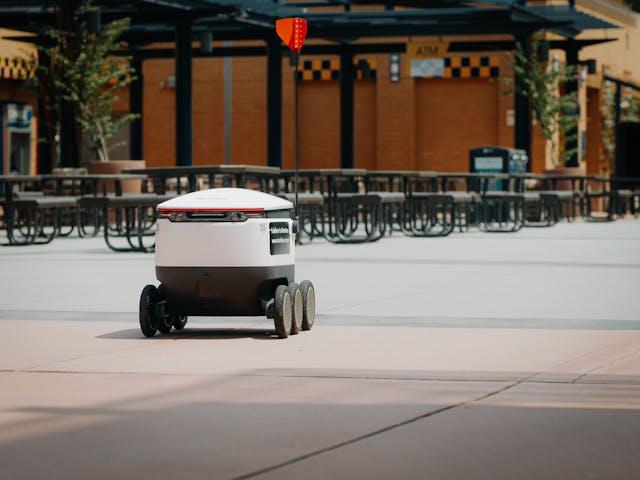
Autonomous vehicles offer efficiency gains that ripple across transportation systems and urban design.
Safety
Human error causes the vast majority of traffic accidents. AVs don’t get distracted, fatigued, or impaired. While edge cases remain challenging, properly designed autonomous systems have the potential to dramatically reduce accidents-and the human suffering they cause.
Freight and Logistics
Autonomous trucking is advancing rapidly, with companies like Aurora, Kodiak, and TuSimple testing driverless freight on U.S. highways.
The economics are compelling: trucks that can operate continuously (with appropriate safety protocols) reduce delivery times and labor costs. Predictable autonomous logistics could reshape supply chains.
Urban Design
Cities built around car ownership dedicate enormous space to parking-often 30% or more of urban land area. Shared autonomous vehicles could dramatically reduce parking demand, freeing space for housing, parks, and commercial development. Reduced congestion improves air quality; quieter electric AVs reduce noise pollution.
Challenges: What Stands Between Promise and Reality
Despite remarkable progress, significant obstacles remain before autonomous vehicles achieve widespread deployment.
Technical: Edge Cases and Unpredictability
AVs must handle the ‘long tail’ of rare scenarios: unusual weather, construction zones, emergency vehicles, unpredictable pedestrian behavior. Each edge case requires training data and algorithmic solutions. The real world generates an endless variety of situations that challenge even the most sophisticated systems.
Regulatory: Evolving Frameworks
Traffic laws were written for human drivers. Questions of liability-who is responsible when an autonomous vehicle causes an accident – remain legally complex. In the U.S., NHTSA (National Highway Traffic Safety Administration) is developing federal guidelines while states like California maintain their own testing and deployment permit systems.
In Europe, the EU AI Act classifies autonomous vehicles as ‘high-risk’ AI systems, imposing requirements for transparency, human oversight, and safety validation.
Harmonizing regulations across jurisdictions-essential for manufacturers operating globally-remains a work in progress.
Data Privacy and Cybersecurity
Autonomous vehicles collect vast amounts of data-location history, driving patterns, passenger information, and continuous environmental sensing.
Protecting this data from unauthorized access, ensuring user privacy, and securing vehicle systems against cyber-attacks are critical requirements. A compromised AV isn’t just a data breach; it’s a potential safety hazard.
INDUSTRY CONTEXT: The Regulatory Landscape
|
CESAR: Building the Autonomous Future
CESAR partners with automotive companies to develop the technologies that enable autonomous mobility-from AI systems and sensor integration to V2X communication and fleet management platforms.
CESAR + Wings: VAI Fleet Intelligence
With EMBRAPII support, CESAR partnered with Wings to develop VAI-an AI-powered vehicle assistant that monitors fleet health with precision. VAI uses machine learning to identify faults, analyze performance patterns, and generate predictive alerts before problems occur.
Equipped with GPS, motion sensors, and cellular connectivity, VAI provides real-time tracking, speed monitoring, vehicle status updates, and mechanical failure alerts. Currently serving 12,000+ vehicles, VAI demonstrates how AI can make fleet operations more efficient, safer, and increasingly autonomous.