
7 mins to read
CESAR .
Publicado em: 15 de abril de 2026
AI and Big Data in Automotive: From Smart Factories to Personalized Driving

Artificial intelligence and data analytics are transforming how vehicles are built, how they drive, and how they adapt to each user-reshaping the automotive value chain from production floor to driver’s seat.
AI and big data have moved from emerging technologies to essential infrastructure in the automotive industry. These tools don’t just complement each other-they create a feedback loop that continuously improves everything from factory efficiency to the moment a driver settles into the seat.
On the production side, AI-powered systems optimize assembly lines, predict equipment failures, and maintain quality standards that would be impossible to achieve with human inspection alone. In the vehicle itself, machine learning algorithms personalize the driving experience, adapting everything from climate control to route suggestions based on individual behavior patterns.
MARKET MOMENTUM: AI Drives the Automotive Sector’s Future
|
AI-Powered Production: The Smart Factory Revolution
Modern automotive manufacturing increasingly relies on AI to achieve precision, speed, and consistency that human operators alone cannot match. This Industry 4.0 transformation touches every stage of production.
Intelligent Robotics and Assembly
AI-programmed robots handle repetitive, high-precision tasks-welding body panels, installing components, applying paint with micron-level accuracy. Machine learning enables these systems to make real-time adjustments, compensating for minor variations in materials or positioning without halting the line.
BMW’s Spartanburg plant in South Carolina, for example, uses AI-guided robots that work alongside human technicians, handling tasks too ergonomically challenging for sustained human effort while humans focus on complex quality decisions.
Tesla’s Fremont and Austin facilities push further, with AI systems coordinating thousands of robots in real-time to maintain production velocity.
Computer Vision for Quality Control
AI-powered computer vision systems monitor every production stage, identifying defects invisible to the human eye-hairline cracks, paint imperfections, alignment variations measured in fractions of a millimeter.
Cameras and sensors capture data; machine learning algorithms analyze it in real time, flagging issues before defective parts move downstream.
This automated inspection reduces rework; cuts waste and raises quality standards across the industry. Manufacturers report significant reductions in warranty claims and recalls when AI quality systems are deployed at scale.
Predictive Supply Chain and Demand Forecasting
Big Data analytics enable automakers to forecast demand with unprecedented accuracy, analyzing historical sales patterns, economic indicators, and even social media sentiment. AI systems optimize production and they schedule accordingly, preventing both bottlenecks and overproduction.
The same predictive capabilities extend to supply chain management-anticipating parts shortages before they occur, identifying alternative suppliers, and adjusting logistics in real time. After the semiconductor crisis of 2021-2022, automakers have invested heavily in AI-driven supply chain visibility.
The production benefits compound: faster cycle times, reduced waste, higher quality standards, and more resilient supply chains. Manufacturers that master AI-driven production gain structural cost advantages that compound over time.

Personalizing the Driving Experience with AI
Beyond the factory, AI transforms how drivers interact with their vehicles. Modern cars learn from behavior, adapting to individual preferences without requiring manual configuration.
Adaptive Comfort and Environment
AI systems can learn driver preferences for seat position, steering wheel angle, mirror settings, climate control, and interior lighting-adjusting automatically when a specific driver enters the vehicle. Some systems go further, detecting fatigue through steering patterns or eye tracking and adjusting cabin conditions to help maintain alertness.
Intelligent Navigation and Infotainment
Voice-activated virtual assistants-powered by natural language processing-have become standard in premium vehicles.
Systems like Mercedes-Benz MBUX, BMW’s Intelligent Personal Assistant, and GM’s Google-integrated infotainment learn user preferences over time, suggesting routes based on past behavior, traffic conditions, and time of day.
These systems move beyond simple voice commands to contextual understanding: recognizing that a question about nearby restaurants at 12:30 PM probably means lunch, not dinner, and filtering suggestions accordingly.
Challenges: Data Privacy, Security, and Infrastructure
The benefits of AI and big data come with significant responsibilities-and risks that automakers must address head-on.
Data Privacy and Regulatory Compliance
Vehicles that personalize based on driver behavior collect sensitive data: location history, driving patterns, voice recordings, even biometric indicators. Regulations like the EU’s General Data Protection Regulation (GDPR) and California’s Consumer Privacy Act (CCPA) impose strict requirements on how this data is collected, stored, and used.
Automakers must develop transparent data policies, give users meaningful control over their information, and implement robust protections against unauthorized access. Trust is essential-drivers won’t embrace AI personalization if they fear surveillance.
Cybersecurity in Connected Vehicles
As vehicles become software-defined platforms, cybersecurity becomes safety-critical. A compromised vehicle system isn’t just a data breach-it’s a potential safety hazard. Automakers are investing heavily in secure-by-design architectures, over-the-air update capabilities, and continuous threat monitoring.
Infrastructure Investment
Full AI integration requires substantial infrastructure: data processing centers, cloud computing capacity for large-scale analytics, robust connectivity for real-time vehicle communication. These investments are significant but necessary for automakers to compete in an increasingly software-driven industry.
The Autonomous Opportunity
The ultimate expression of automotive AI is autonomous driving. Here, Big Data and machine learning converge to enable vehicles that perceive their environment, predict the behavior of other road users, and navigate safely without human intervention.
In the U.S., companies like Waymo (completing 150,000+ weekly rides), Tesla (with its Full Self-Driving beta), and GM’s Cruise are pushing the boundaries of what’s possible.
In China, Baidu’s Apollo Go robotaxis have captured up to 70% ride-hailing share in pilot districts by offering fares as low as 4 yuan. These autonomous systems depend on the same AI and big data foundations that power factory optimization and personalized UX-proving that investment in these capabilities pays dividends across the entire automotive value chain.
CESAR: Enabling AI-Driven Automotive Innovation
CESAR brings deep expertise in AI, IoT, big data, and cybersecurity to automotive partners-helping manufacturers and mobility companies navigate the technical complexity of AI integration.
CESAR + Volkswagen + EyeFlow: Intelligent Commercial Vehicles
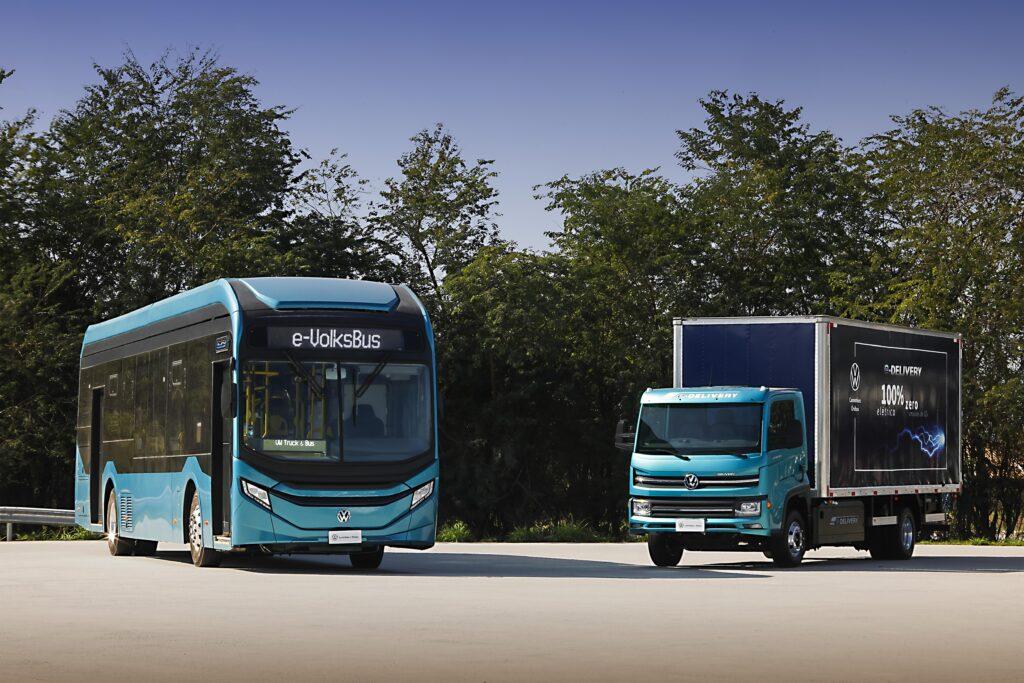
A prime example: CESAR partnered with Volkswagen Truck & Bus and EyeFlow to explore technologies for integrating electric and semi-autonomous trucks into urban traffic. The project developed V2V (vehicle-to-vehicle) and V2X (vehicle-to-everything) communication systems with intuitive external interfaces-enabling commercial vehicles to interact safely with pedestrians, cyclists, and urban infrastructure.
This initiative demonstrates how AI, computer vision, and connected-vehicle technology combine to make urban freight transportation safer, more efficient, and more inclusive.
How CESAR Supports Automotive AI Transformation
- Cybersecurity: Protecting vehicle systems and user data in an era of increasing connectivity
- User Experience (UX): Designing AI-powered interfaces that adapt intuitively to driver preferences
- Data Analytics: Interpreting large-scale data for quality control, predictive maintenance, and continuous improvement
- Vehicle Infrastructure: Implementing and integrating technologies that optimize internal processes and enable more autonomous operation